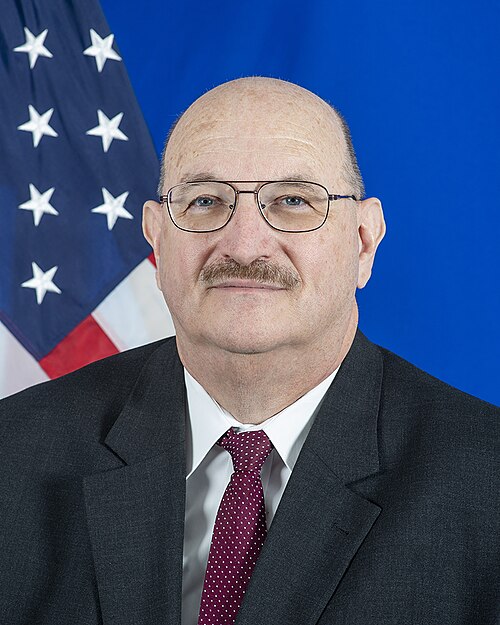
In an interview in Lawfare, AFSA president describes the trials of the Foreign Service.
John Dinkelman: The foreign service is a canary in the coal mine for other ranking person systems in the U.S. government, namely the U.S. military. And as we see the erosion in the confidence that we have in our duly appointed, commissioned officers of our government to fulfill the legal requirements of their positions, it is potentially increasingly adverse in its effects on our government.
John Dinkelman: It’s a rather big picture to paint my friend. The issue being that you have a professional foreign service that is nonpartisan so that it can serve the interests of the nation. And because that is such a sensitive and critical tool for a government over the course of literally centuries, we have enshrined the organization so that it could not be used to the disadvantage of our country for internal political purposes.
There are a lot of safeguards that were put into place. One example would be, let’s assume for a moment that for some unanticipated reason, we decided that we didn’t need 10,000 diplomats, but rather we wanted to have only 8,000 and so it was time to summarily escort 2,000 of them out the door.
There is an intricate, or there was an intricate system, by which it would be determined which one of us would be of the least value to the United States government. Putting it in military terms, if you have a bunch of majors. And you decide that you want to get rid of 20% of your majors, do you just take the ones who are assigned to one military base and say you’re all fired?
Or do you go through, and you look at their evaluations, you see their performance, you see their expertise, and you take the 20% of the lowest performers and you tell them that they’re done? And that’s the way it had been with the foreign service, to allow the safeguards to be in place to tell those under performers or lower performers in the case that it was their time to go.
But instead, the administration just summarily decided to throw all those rules out the window and to go with the military example, to simply take the bases that they didn’t want to continue on and tell everybody that they were gone.
That undermined the confidence that individuals within the foreign service had, that they would be judged on their merits, that meritocracy would prevail, and that if they did a good job, that they would be rewarded or at least not punished accordingly.
That went out the window on July 11th and has led to the crisis of confidence, which we have within the organization. And that is one of, but various things, that has gone on in the organization that has eroded our ability to conduct our diplomacy in a manner that America deserves.